
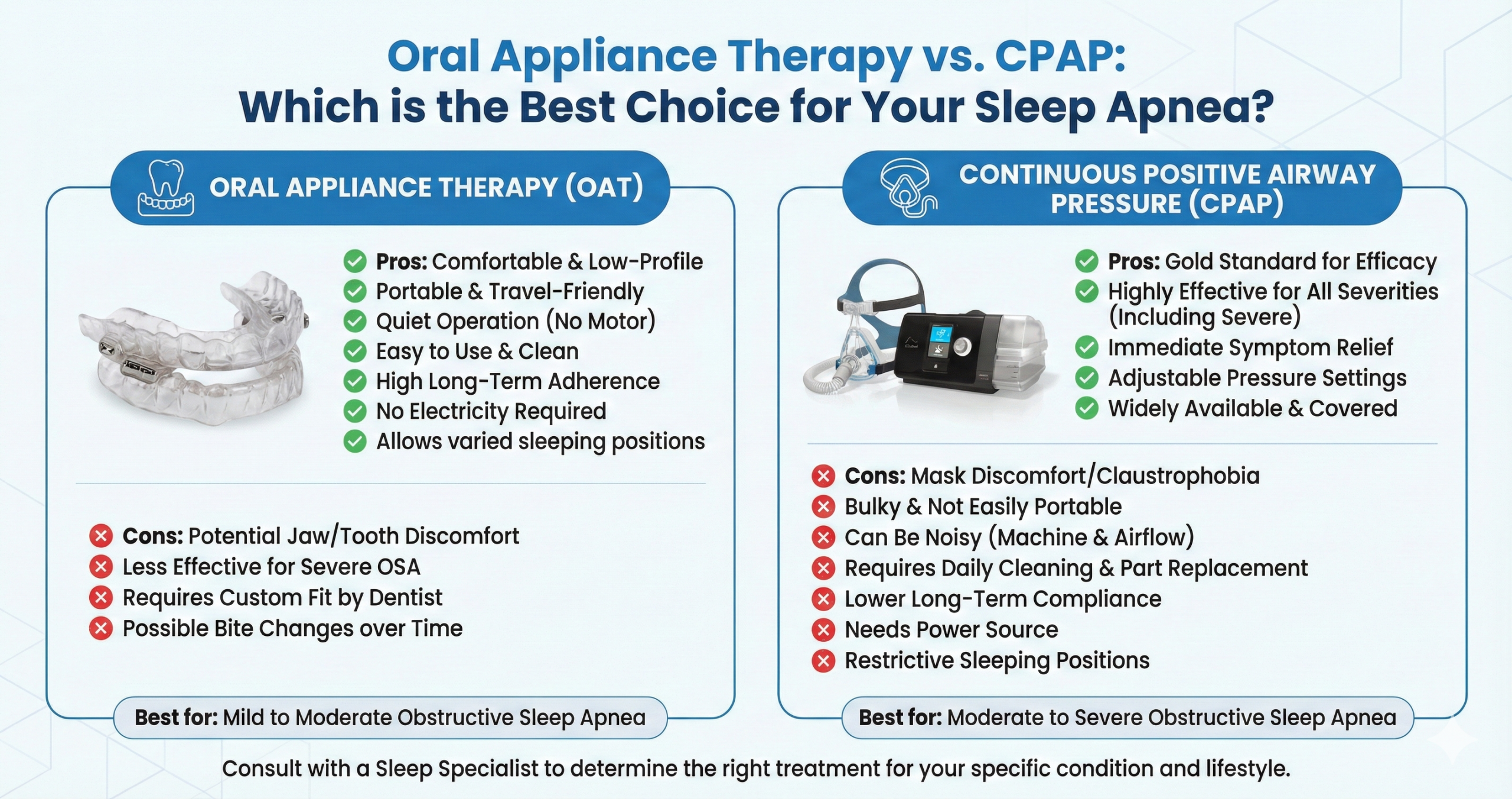
If you have been diagnosed with sleep apnea, you are likely exploring your treatment options. The two most common solutions are Continuous Positive Airway Pressure (CPAP) therapy and oral appliance therapy (OAT). Understanding the differences between these treatments can help you make an informed decision about your health.
Millions of Americans struggle with sleep apnea, a condition that causes repeated interruptions in breathing during sleep. Left untreated, this disorder can lead to serious health complications including heart disease, stroke, diabetes, and chronic fatigue. The good news is that effective treatments exist, and finding the right one for your lifestyle can dramatically improve your quality of life.
In this comprehensive guide, we will compare oral appliance therapy and CPAP machines to help you determine which treatment might work best for your unique situation. We serve patients throughout Towson, Timonium, Baltimore, and the surrounding Maryland communities who are seeking alternatives to traditional sleep apnea treatments.
Understanding Sleep Apnea and Why Treatment Matters
Sleep apnea is a serious sleep disorder characterized by repeated pauses in breathing throughout the night. These pauses, called apneas, can occur dozens or even hundreds of times per night. Each time breathing stops, your brain partially wakes you to restore normal breathing, disrupting your sleep cycle.
The most common form is obstructive sleep apnea (OSA), which occurs when the soft tissues in the throat collapse and block the airway during sleep. This blockage prevents adequate oxygen from reaching your lungs and brain. Your body responds by briefly waking to reopen the airway, often with a gasp or choking sound.
The Health Consequences of Untreated Sleep Apnea
When sleep apnea goes untreated, the effects extend far beyond feeling tired during the day. The repeated drops in blood oxygen levels put tremendous strain on your cardiovascular system. Over time, this can lead to high blood pressure, irregular heartbeat, heart attack, and stroke.
The chronic sleep deprivation caused by sleep apnea also affects cognitive function, mood, and metabolism. Many patients experience memory problems, difficulty concentrating, depression, and weight gain. The daytime drowsiness associated with this condition significantly increases the risk of workplace accidents and motor vehicle crashes.
What is CPAP Therapy?
CPAP therapy has been the traditional gold standard treatment for sleep apnea since the 1980s. The system consists of a machine that generates continuous air pressure, a hose, and a mask worn over the nose or nose and mouth. The pressurized air keeps the airway open throughout the night, preventing the breathing interruptions characteristic of sleep apnea.
When used correctly and consistently, CPAP therapy is highly effective at eliminating apnea events and restoring normal oxygen levels during sleep. Many patients notice improvements in their energy levels, mood, and overall health within days of starting treatment. The machine can be adjusted to deliver the precise pressure needed to keep each individual patient’s airway open.
Common Challenges with CPAP
Despite its effectiveness, CPAP therapy comes with significant challenges that affect patient compliance. Studies consistently show that 30 to 50 percent of CPAP users abandon the treatment within the first year. Understanding these challenges is important when weighing your treatment options.
Many patients find the mask uncomfortable, claustrophobic, or difficult to keep in place throughout the night. The constant airflow can cause nasal congestion, dry mouth, and skin irritation. Some patients report feeling confined by the hose and restricted in their sleep positions.
The noise of the machine, though significantly reduced in newer models, can still disturb light sleepers and bed partners. Travel with CPAP equipment requires planning and adds bulk to luggage. The machine also requires regular cleaning and maintenance, including filter changes and mask replacements.
What is Oral Appliance Therapy?
Oral appliance therapy offers a different approach to treating sleep apnea. Instead of using pressurized air, these custom-fitted dental devices work by repositioning the jaw and tongue to keep the airway open during sleep. The appliance looks similar to a sports mouthguard or orthodontic retainer and is worn only during sleep.
A qualified sleep dentist creates the appliance based on detailed impressions of your teeth and bite. The device gently advances the lower jaw forward, which tightens the soft tissues and muscles of the upper airway. This prevents the airway collapse that causes obstructive sleep apnea.
How Oral Appliances Work
The mechanics behind oral appliance therapy are straightforward yet highly effective. By moving the lower jaw forward, the appliance increases the space behind the tongue and soft palate. This enlarged airway is less likely to collapse during the muscle relaxation that naturally occurs during sleep.
Modern oral appliances are adjustable, allowing your sleep dentist to fine-tune the jaw position for optimal results. The adjustment process typically occurs over several weeks as you adapt to wearing the device. Follow-up sleep testing confirms that the appliance is effectively controlling your sleep apnea.
Comparing Comfort and Convenience
One of the most significant differences between CPAP and oral appliance therapy is the user experience. Patient comfort directly impacts treatment success because a therapy only works if you use it consistently. Here is how these two options compare in terms of everyday use.
Ease of Use
Oral appliance therapy offers remarkable simplicity. You simply insert the appliance before bed and remove it in the morning. There are no machines to set up, no masks to adjust, and no hoses to manage. The small, portable design makes it easy to maintain your treatment routine whether you are at home or traveling.
CPAP therapy requires more setup and maintenance. You must fill the humidifier chamber, ensure proper mask fit, and position yourself in a way that does not dislodge the mask during sleep. Many patients find this nightly routine burdensome, especially when they are already tired at bedtime.
Travel Considerations
For frequent travelers, oral appliance therapy offers clear advantages. The compact device fits easily in a pocket or purse and requires no electrical outlet. You can maintain your treatment on airplanes, in hotels, and while camping without any special accommodations.
CPAP machines, while available in travel-sized versions, still require packing additional equipment and finding access to electrical power. Airport security may require inspection of the equipment. Many travelers report inconsistent use of their CPAP when away from home simply due to the inconvenience.
Impact on Bed Partners
Sleep apnea often affects not just the patient but also their bed partner. The loud snoring associated with untreated sleep apnea can severely disrupt a partner’s sleep. Treatment should ideally improve sleep quality for both individuals sharing the bed.
Oral appliance therapy is silent and does not require electricity, making it virtually undetectable to a bed partner. CPAP machines, while quieter than older models, still produce some noise that may bother light sleepers. The mask and hose can also interfere with physical intimacy and cuddling.
Effectiveness for Different Severity Levels
Both CPAP and oral appliance therapy are proven treatments for sleep apnea, but their effectiveness varies depending on the severity of your condition. Understanding how each treatment performs across different severity levels can help guide your decision.
Mild to Moderate Sleep Apnea
For patients with mild to moderate sleep apnea, oral appliance therapy is considered a first-line treatment option by the American Academy of Sleep Medicine. Research shows that oral appliances effectively reduce apnea events and improve oxygen levels in these patients. Many experience complete resolution of their symptoms.
The success rate of oral appliance therapy in mild to moderate cases rivals that of CPAP when accounting for actual usage. While CPAP may achieve slightly better results in controlled studies, the higher compliance rates with oral appliances often lead to better real-world outcomes.
Severe Sleep Apnea
CPAP has traditionally been the recommended treatment for severe sleep apnea due to its ability to completely eliminate airway obstruction. However, oral appliance therapy can be an effective alternative for patients with severe sleep apnea who cannot tolerate CPAP.
The key consideration is compliance. A treatment that is used consistently, even if slightly less effective per hour, may provide better overall health outcomes than a theoretically superior treatment that sits unused in a closet. Your sleep dentist can help determine if oral appliance therapy is appropriate for your specific situation.
Who is a Good Candidate for Oral Appliance Therapy?
Oral appliance therapy works well for many sleep apnea patients, but certain factors can influence its success. A thorough evaluation by a qualified sleep dentist will help determine if this treatment is right for you.
The following characteristics often indicate a good candidate for oral appliance therapy:
- Diagnosis of mild to moderate obstructive sleep apnea
- Inability to tolerate or comply with CPAP therapy
- Primary snoring without apnea events
- Preference for a non-invasive, portable treatment option
- Adequate number of healthy teeth to support the appliance
- Normal or near-normal jaw joint function
- Body mass index within a reasonable range
- Willingness to attend follow-up appointments for adjustments
Patients who have tried CPAP and found it uncomfortable, inconvenient, or impossible to use consistently are often excellent candidates for oral appliance therapy. The higher comfort level typically translates to better compliance and, ultimately, better treatment outcomes.
The Process of Getting an Oral Appliance
If you decide to pursue oral appliance therapy, understanding the process can help you know what to expect. Treatment begins with a comprehensive evaluation and ends with ongoing monitoring to ensure continued success.
Initial Consultation and Evaluation
Your first visit to a sleep dentist involves a thorough examination of your teeth, gums, jaw joints, and airway. The dentist will review your sleep study results and medical history. This evaluation determines whether oral appliance therapy is appropriate for your specific condition.
Digital scans or impressions of your teeth create the foundation for your custom appliance. The dentist takes detailed measurements of your bite and jaw position. This information ensures that your appliance fits precisely and functions effectively.
Appliance Fitting and Adjustment
Once your custom appliance is fabricated, you will return for a fitting appointment. The dentist ensures the device fits comfortably and provides instructions for insertion, removal, and care. Initial adjustments position your jaw for optimal airway opening while maintaining comfort.
Over the following weeks, you will have several follow-up appointments to fine-tune the appliance position. This titration process gradually advances the jaw until the optimal therapeutic position is achieved. Your dentist monitors for any side effects and ensures the appliance remains comfortable.
Follow-Up Testing and Monitoring
After the adjustment period, a follow-up sleep study confirms that the appliance is effectively treating your sleep apnea. This objective measurement verifies that apnea events have been reduced to acceptable levels. Adjustments can be made if the initial results indicate room for improvement.
Long-term success with oral appliance therapy requires regular dental check-ups to monitor your teeth, bite, and jaw joint health. Annual sleep studies may be recommended to ensure continued effectiveness. Most patients find that their appliance remains effective for several years with proper care.
Insurance Coverage and Cost Considerations
Understanding the financial aspects of sleep apnea treatment helps you plan appropriately. Both CPAP and oral appliance therapy are typically covered by medical insurance when prescribed for diagnosed sleep apnea.
Most medical insurance plans, including Medicare, cover oral appliance therapy for patients with documented sleep apnea. Coverage often requires a formal diagnosis through a sleep study and may specify criteria such as CPAP intolerance. Our office works directly with insurance companies to maximize your benefits and minimize out-of-pocket expenses.
The long-term costs of each treatment should also be considered. CPAP machines require ongoing expenses for replacement masks, filters, tubing, and eventually new machines. Oral appliances typically need replacement every three to five years and may require occasional adjustments.
Making Your Decision
Choosing between CPAP and oral appliance therapy is a personal decision that depends on your specific condition, lifestyle, and preferences. Both treatments can effectively manage sleep apnea and improve your health when used consistently.
Consider oral appliance therapy if you value portability, simplicity, and comfort. This treatment excels for patients who travel frequently, share a bed with a light sleeper, or simply prefer a less intrusive option. The higher compliance rates often translate to better real-world results.
CPAP may be the better choice for patients with severe sleep apnea who can tolerate the therapy or for those who have tried oral appliance therapy without adequate improvement. Some patients find that CPAP works well once they identify the right mask style and pressure settings.
Take the Next Step Toward Better Sleep
Quality sleep is essential for your health, happiness, and daily performance. If sleep apnea is robbing you of restful nights and energetic days, effective treatment can transform your life. Whether you are newly diagnosed or struggling with CPAP, oral appliance therapy may be the solution you have been seeking.
Our experienced team specializes in dental sleep medicine and has helped countless patients throughout Towson, Timonium, Baltimore, and the greater Maryland area achieve better sleep. We take the time to understand your unique situation and recommend the treatment most likely to succeed for you.
Do not let sleep apnea continue to affect your health and quality of life. Request an appointment today to learn more about your treatment options and take the first step toward better sleep.
Contact Us
Address: 20 E. Timonium Rd., Suite 211, Timonium, MD 21093
Phone (General): 410-832-5858
Phone (Veterans Line): 410-881-6092
Serving patients in Towson, Timonium, Baltimore, Lutherville, Cockeysville, Hunt Valley, Parkville, Perry Hall, and throughout Baltimore County, Maryland.