
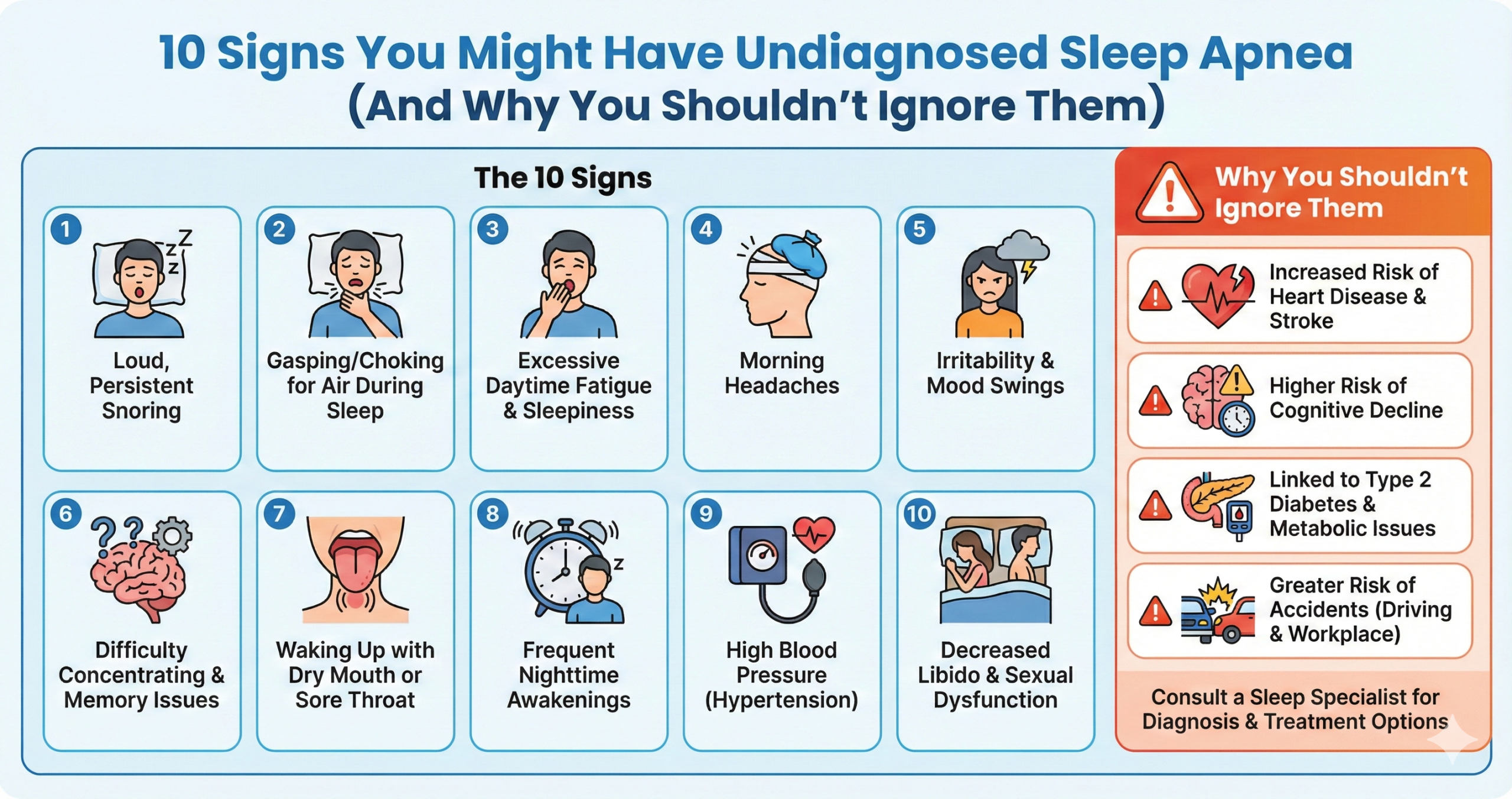
Millions of Americans are living with sleep apnea without even knowing it. This common yet serious sleep disorder affects an estimated 30 million people in the United States, but experts believe that approximately 80 percent of cases remain undiagnosed. If you frequently wake up feeling exhausted despite spending enough hours in bed, your body may be trying to tell you something important.
Sleep apnea causes repeated interruptions in breathing throughout the night, sometimes hundreds of times in a single sleep session. These breathing pauses deprive your brain and body of oxygen while fragmenting your sleep cycle. The consequences extend far beyond daytime tiredness, affecting your heart health, mental clarity, metabolism, and overall quality of life.
Understanding the warning signs of this condition could be the first step toward reclaiming your health and energy. In this comprehensive guide, we will explore the ten most common signs that you might have undiagnosed sleep apnea and explain why seeking treatment is so important. Our practice serves patients throughout Towson, Timonium, Baltimore, and the surrounding Maryland communities who are seeking answers about their sleep health.
Why Sleep Apnea Often Goes Undiagnosed
Before diving into the warning signs, it helps to understand why so many people live with sleep apnea without realizing it. The primary reason is simple: the most obvious symptoms occur while you are asleep. You cannot observe your own snoring, gasping, or breathing pauses while unconscious.
Many people dismiss the daytime symptoms as normal consequences of a busy lifestyle. Feeling tired, struggling to concentrate, and needing caffeine to function have become so common in modern society that we often accept them as unavoidable. However, these symptoms frequently point to an underlying sleep disorder that is both treatable and important to address.
Additionally, sleep apnea does not fit a single profile. While the condition is more common in overweight middle-aged men, it affects people of all ages, body types, and genders. Women, children, and physically fit individuals can all develop sleep apnea, though their symptoms may present differently than the classic pattern.
Sign 1: Loud, Chronic Snoring
Snoring is perhaps the most recognized sign of sleep apnea, though not everyone who snores has the condition. The type of snoring associated with sleep apnea tends to be particularly loud, disruptive, and punctuated by periods of silence followed by gasping or choking sounds.
If your bed partner has complained about your snoring or has moved to another room to get sleep, this is a significant warning sign. The snoring occurs because air is trying to squeeze through a partially blocked airway, creating vibrations in the throat tissues. When the airway becomes completely blocked, the snoring stops temporarily until breathing resumes with a gasp.
Pay attention to snoring that occurs in all sleep positions, not just when lying on your back. Positional snoring that improves when you change positions is less likely to indicate sleep apnea than snoring that persists regardless of how you sleep.
Sign 2: Witnessed Breathing Pauses
One of the most telling signs of sleep apnea is when someone else observes you stop breathing during sleep. Bed partners often notice these episodes before the person experiencing them becomes aware of any problem. The pattern typically involves snoring that suddenly stops, a period of silence lasting several seconds to over a minute, followed by a loud snort or gasp as breathing resumes.
These witnessed apneas can be frightening for bed partners to observe. Many describe the experience as watching their loved one repeatedly stop breathing and wondering if they will start again. If anyone has told you that you stop breathing during sleep, take this observation seriously and consult a healthcare provider.
Even if you sleep alone, you might notice indirect evidence of breathing pauses. Waking suddenly with a sensation of choking or gasping for air could indicate that your body is rousing itself to restart breathing after an apnea event.
Sign 3: Excessive Daytime Sleepiness
Feeling extremely tired during the day, despite spending adequate time in bed, is one of the hallmark symptoms of sleep apnea. This is not ordinary tiredness that improves with a good night’s rest. Instead, it is a persistent, overwhelming fatigue that interferes with daily activities and does not respond to extra sleep.
People with undiagnosed sleep apnea often struggle to stay awake during passive activities like watching television, reading, or sitting in meetings. Some experience microsleeps, brief episodes of sleep lasting just seconds that occur without warning. These microsleeps become particularly dangerous when driving or operating machinery.
The sleepiness occurs because the repeated breathing interruptions prevent you from reaching and maintaining the deep, restorative stages of sleep. Even though you may be in bed for eight hours, your actual sleep quality is severely compromised, leaving you feeling exhausted no matter how long you rest.
Sign 4: Morning Headaches
Waking up with a headache on a regular basis can indicate sleep apnea. These morning headaches typically feel like a dull, pressing pain on both sides of the head. They usually occur upon waking and gradually improve within a few hours after getting up.
The headaches result from changes in oxygen and carbon dioxide levels during apnea episodes. When breathing stops repeatedly throughout the night, oxygen levels drop while carbon dioxide builds up in the bloodstream. This imbalance causes blood vessels in the brain to dilate, triggering headache pain.
If you frequently reach for pain medication first thing in the morning, consider whether sleep apnea might be the underlying cause. Unlike tension headaches or migraines, these headaches are directly linked to sleep quality and will typically resolve once the sleep disorder is properly treated.
Sign 5: Difficulty Concentrating and Memory Problems
Sleep apnea takes a significant toll on cognitive function. Many people with undiagnosed sleep apnea notice problems with concentration, memory, and mental sharpness. Tasks that once came easily may feel more challenging, and you might find yourself making uncharacteristic mistakes at work or forgetting important details.
The brain requires quality sleep to consolidate memories, clear metabolic waste products, and restore optimal function. When sleep is fragmented by repeated awakenings, these essential processes are disrupted. The resulting cognitive impairment can affect everything from professional performance to personal relationships.
Some people mistake these cognitive symptoms for early signs of dementia or simply attribute them to aging. However, when sleep apnea is the cause, treatment often leads to significant improvements in mental clarity and cognitive function.
Sign 6: Mood Changes and Irritability
The connection between sleep and mood is well established, and sleep apnea frequently manifests as emotional and psychological symptoms. People with undiagnosed sleep apnea often experience increased irritability, mood swings, anxiety, and depression.
You might find yourself snapping at family members or coworkers over minor issues. Feelings of frustration, hopelessness, or emotional flatness may become more common. Some people lose interest in activities they once enjoyed or withdraw from social interactions because they simply feel too tired.
These mood changes can strain relationships and reduce overall quality of life. Unfortunately, many people seek treatment for depression or anxiety without realizing that a sleep disorder may be contributing to their emotional struggles. Addressing the underlying sleep apnea often leads to meaningful improvements in mood and emotional well-being.
Sign 7: Waking Up with a Dry Mouth or Sore Throat
People with sleep apnea frequently breathe through their mouths during sleep, especially when nasal passages are blocked or when struggling to breathe past an obstructed airway. This mouth breathing leads to dryness that persists into the morning hours.
If you consistently wake up with a parched mouth, dry throat, or need to drink water immediately upon waking, this could indicate nighttime mouth breathing associated with sleep apnea. Some people also experience a sore throat upon waking due to the vibration and irritation caused by snoring.
While dry mouth can have other causes, such as medication side effects or dehydration, its consistent occurrence upon waking warrants investigation. Combined with other symptoms on this list, morning dry mouth becomes a meaningful piece of the diagnostic puzzle.
Sign 8: Frequent Nighttime Urination
Waking up multiple times during the night to urinate, a condition called nocturia, is surprisingly common among people with sleep apnea. Many people assume their nighttime bathroom trips are due to aging, prostate issues, or drinking too much fluid before bed. However, sleep apnea may be the hidden culprit.
The connection involves complex hormonal changes that occur during apnea episodes. When oxygen levels drop and the body strains to breathe against an obstructed airway, it triggers the release of a hormone that increases urine production. Additionally, the repeated awakenings make you more aware of bladder sensations that you might otherwise sleep through.
If you find yourself getting up two or more times per night to urinate and other medical causes have been ruled out, sleep apnea should be considered. Many patients report significant reductions in nighttime urination after starting sleep apnea treatment.
Sign 9: Decreased Libido and Sexual Dysfunction
Sleep apnea can significantly impact sexual health and intimacy. Both men and women with untreated sleep apnea commonly report decreased interest in sex and various forms of sexual dysfunction. For men, this often includes erectile dysfunction that does not respond well to typical treatments.
The mechanisms behind these effects include hormonal disruptions, particularly reduced testosterone production, as well as the physical and emotional toll of chronic fatigue. When you are exhausted and struggling with mood changes, sexual desire naturally decreases. The cardiovascular effects of sleep apnea can also impair blood flow, directly affecting sexual function.
Many people feel uncomfortable discussing these symptoms, but they represent important health indicators. If you have noticed changes in your sexual health alongside other signs on this list, sleep apnea may be contributing to the problem.
Sign 10: High Blood Pressure That Is Difficult to Control
Sleep apnea and high blood pressure share a strong bidirectional relationship. The repeated drops in oxygen levels during apnea episodes trigger stress responses that raise blood pressure. Over time, this nightly cardiovascular strain can lead to sustained hypertension that persists even during waking hours.
If you have been diagnosed with high blood pressure that does not respond well to medication, or if you require multiple medications to achieve control, undiagnosed sleep apnea may be a contributing factor. Research indicates that treating sleep apnea can help lower blood pressure and improve cardiovascular health.
The American Heart Association recognizes sleep apnea as a significant risk factor for heart disease and recommends screening for patients with resistant hypertension. If your blood pressure remains elevated despite treatment, ask your healthcare provider about sleep apnea testing.
Additional Risk Factors to Consider
While the signs above are the most common indicators of sleep apnea, certain characteristics increase your risk of having this condition. Recognizing these risk factors can help you assess your overall likelihood of having undiagnosed sleep apnea.
The following factors are associated with increased risk:
- Excess body weight, particularly around the neck and throat
- Large neck circumference (greater than 17 inches in men or 16 inches in women)
- Family history of sleep apnea or snoring
- Anatomical features such as a narrow airway, large tonsils, or recessed jaw
- Age over 40, though sleep apnea can occur at any age
- Being male, though women’s risk increases after menopause
- Nasal congestion or obstruction
- Use of alcohol, sedatives, or muscle relaxants
- Smoking
Having multiple risk factors alongside several symptoms from our list significantly increases the probability that sleep apnea may be affecting your health.
Why You Should Not Ignore These Signs
Untreated sleep apnea is not just an inconvenience; it is a serious health condition with potentially life-threatening consequences. The chronic oxygen deprivation and sleep fragmentation place enormous stress on virtually every system in your body.
Cardiovascular risks are among the most serious concerns. People with untreated sleep apnea face significantly higher risks of heart attack, stroke, heart failure, and irregular heart rhythms. The condition also contributes to type 2 diabetes, metabolic syndrome, and liver problems.
Beyond physical health, sleep apnea affects safety and quality of life. The excessive daytime sleepiness increases accident risk, particularly while driving. Cognitive impairment can affect job performance and decision-making. Relationship strain from snoring, mood changes, and decreased intimacy can have lasting effects on personal connections.
Treatment Options Bring Real Relief
The good news is that effective treatments for sleep apnea exist, and most patients experience significant improvements in their symptoms and overall health once treatment begins. The key is getting an accurate diagnosis and finding a treatment approach that works for your individual situation.
Oral appliance therapy has become an increasingly popular treatment option, particularly for patients with mild to moderate sleep apnea or those who cannot tolerate CPAP machines. These custom-fitted dental devices work by gently repositioning the jaw to keep the airway open during sleep.
Many patients prefer oral appliance therapy because of its comfort, convenience, and portability. The devices are silent, require no electricity, and fit easily into a travel bag. Compliance rates with oral appliance therapy are typically higher than with CPAP, which translates to better long-term outcomes.
Take the First Step Toward Better Sleep
If you recognized yourself in several of the signs described in this article, it may be time to investigate whether sleep apnea is affecting your health. You do not have to continue living with exhaustion, morning headaches, and the other symptoms that diminish your quality of life.
Our practice specializes in dental sleep medicine and has helped numerous patients throughout Towson, Timonium, Baltimore, and the greater Maryland area find relief from sleep apnea. We provide comprehensive evaluations to determine whether oral appliance therapy might be an appropriate treatment option for your situation.
Do not let another night of poor sleep compromise your health and well-being. Request an appointment today to discuss your symptoms and learn about your options for better sleep.
Contact Us
Address: 20 E. Timonium Rd., Suite 211, Timonium, MD 21093
Phone (General): 410-832-5858
Phone (Veterans Line): 410-881-6092
Serving patients in Towson, Timonium, Baltimore, Lutherville, Cockeysville, Hunt Valley, Parkville, Perry Hall, and throughout Baltimore County, Maryland.